
Rebuilt the donation and campaign experience end-to-end, increasing conversion by 75%.
Company
Aidcircle
Role
Product Designer
Timeline
3 Weeks
Tools
Figma


Overview
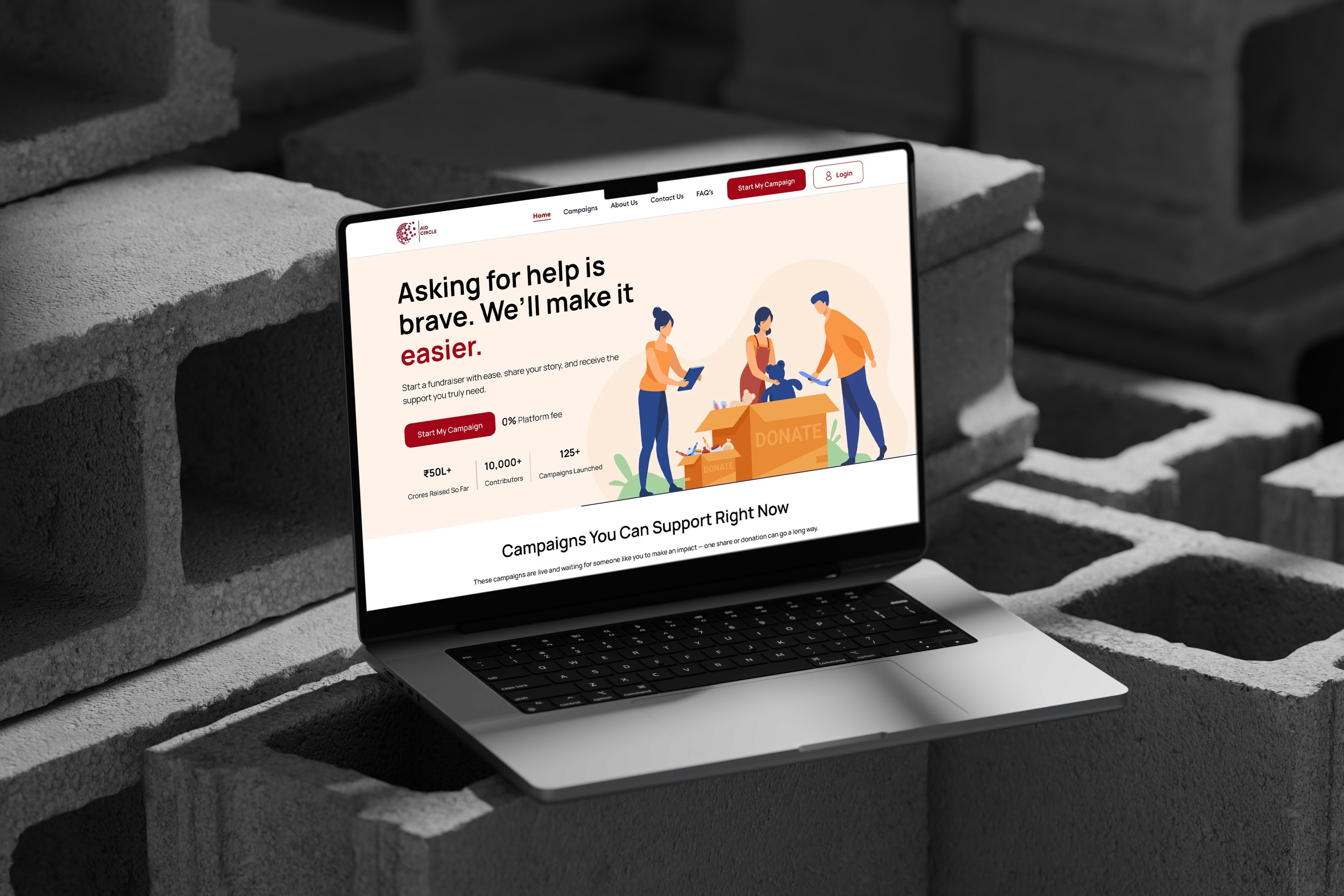
AidCircle is an Indian crowdfunding platform helping people raise funds for medical emergencies, education, and social causes. In June 2025, they approached me with two urgent problems blocking their growth, donors weren't converting, and getting a campaign live required a manual back-and-forth with staff that could take days.
I redesigned the platform end-to-end: rebuilding the donor experience around trust, and replacing the manual campaign creation process with a fully self-serve flow.
The Problem
AidCircle was running paid social media ads that drove traffic directly to campaign pages. But the platform was converting only 1.2% of visitors into donors.
Solution
I redesigned the platform to make impact immediately clear and trust inherently visible-introducing guided donation experiences, transparent verification systems, and self-service campaign creation that eliminates manual bottlenecks and scales the platform sustainably.
Goal
Increase donation conversion rate on campaign detail pages.
Create a self-serve campaign creation flow to eliminate manual staff intervention.
Result
01
75% lift in donation conversion
Conversion rate improved from 1.2% to 2.1% measured against the same social media ad traffic source.
02
Trust-first campaign pages
Verified details, transparent fund breakdowns, and clear storytelling now build immediate donor confidence.
03
Campaign creation goes fully self-serve
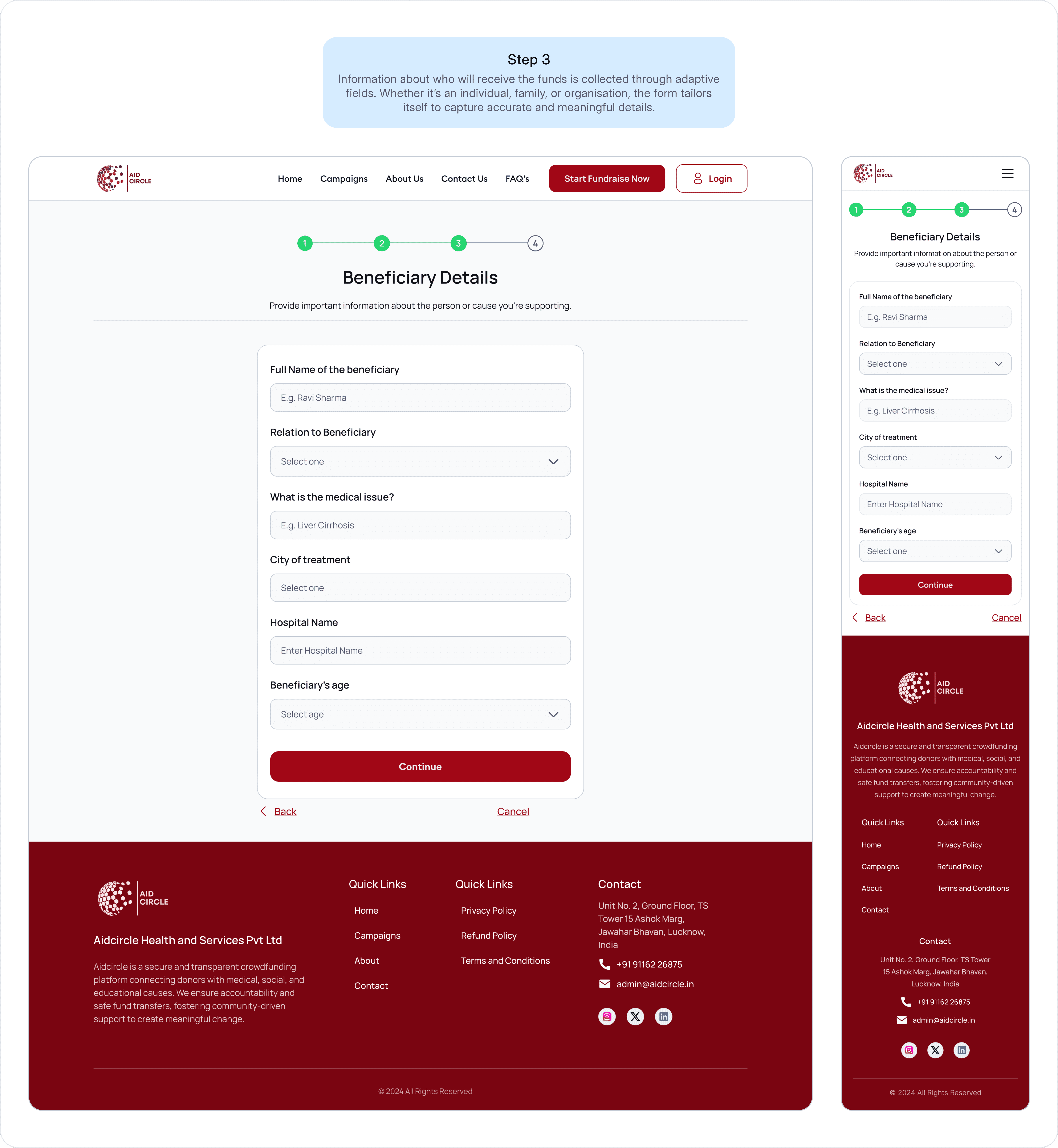
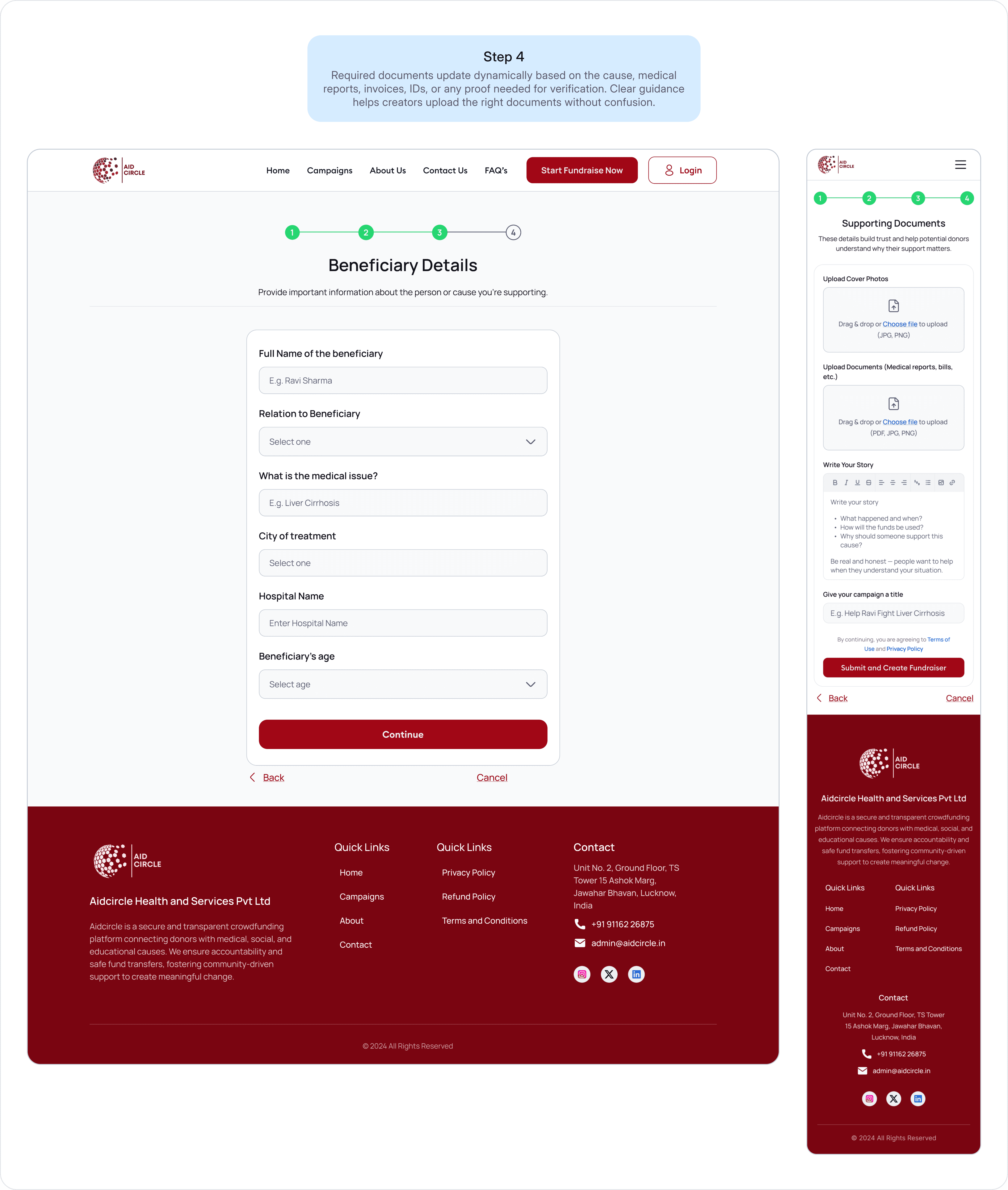
What previously required days of staff back-and-forth is now a 4-step independent flow, zero support intervention needed to go live.
04
A donation flow donors actually trust
Preset amounts, payment method visibility, security signals, and anonymity choice removed every hesitation point from the modal.
Final design
Design Process
Discovery
AidCircle approached me in June 2025 with a critical problem: their crowdfunding platform was receiving traffic, but conversions were disappointingly low. Visitors were browsing campaigns but hesitating to donate, and potential campaign creators were finding it difficult the process. Through stakeholder interviews and platform analysis, I identified the core issues:
For Donors:
The website design felt outdated and didn't inspire confidence.
Lack of visible trust indicators and transparency around fund handling.
Insufficient information about campaign verification and legitimacy.
Unclear impact visibility – donors couldn't see how their contributions would be used
For Fundraisers:
No self-service option to create campaigns independently.
Manual process requiring direct contact with AidCircle team.
Unclear requirements and approval timeline.
Time-consuming back-and-forth that discouraged fundraising attempts.
The underlying problem wasn't just visual – it was a trust deficit on both sides of this two-sided marketplace. Campaign creators needed confidence in the platform's ability to attract donors, while donors needed assurance that their contributions would reach legitimate causes.
Competitor Analysis
Learning From the Market Leaders: To understand industry standards and identify opportunities, I analyzed leading crowdfunding platforms across Indian and global markets: Ketto, Milaap, ImpactGuru, and GoFundMe.
Key Insights That Shaped Our Approach:
Campaign Approval is Standard Practice, Not a Bug Every major platform implements pre-approval processes – Milaap maintains a 24-hour review period, Ketto rejects approximately 23% of campaigns, and GoFundMe requires phone verification before launch. This validated our decision to design a transparent approval flow rather than attempting to hide verification steps. The key was positioning approval as trust-building, not as a barrier.
Progressive Disclosure for Complex Processes Successful platforms break campaign creation into digestible steps. Ketto uses a 4-step flow, Milaap segments by campaign type first, and ImpactGuru surfaces document requirements early to reduce abandonment. We applied these patterns to reduce cognitive load while ensuring users understood requirements upfront.
Trust Through Transparency Leading platforms prominently display verification badges, fund utilization breakdowns, donor counts, and real-time progress. GoFundMe showcases team verification, while Milaap highlights its fraud detection system. We identified opportunities for AidCircle to differentiate through even more visible trust signals.
Audit
A comprehensive audit of AidCircle's existing platform revealed systemic issues across user experience, visual design, and information architecture.
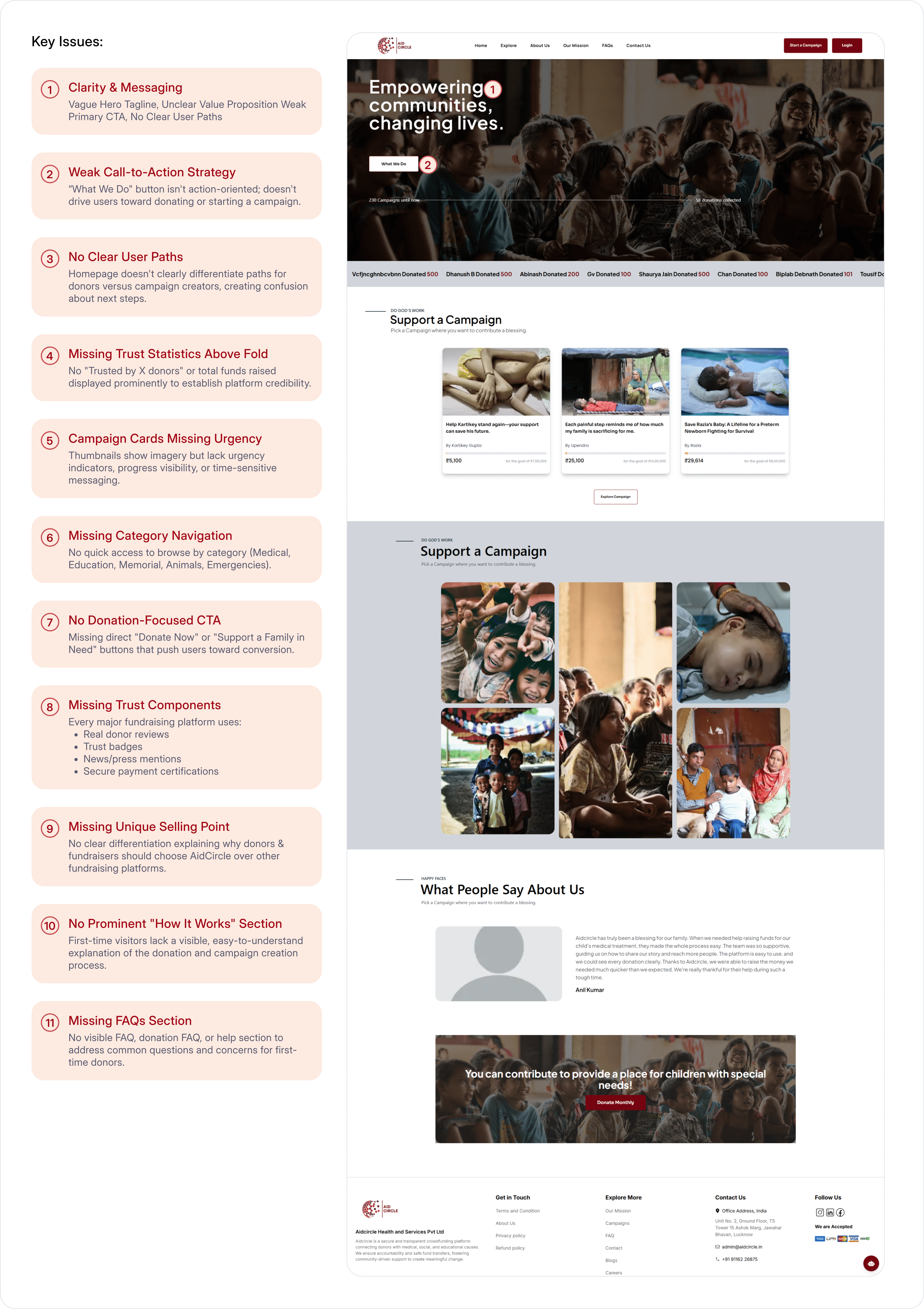
Home Page - Before
The homepage didn’t build trust or clarity fast enough. Impact, credibility, and key actions were buried, making new visitors unsure about what the platform does and why they should engage.
Home Page - After
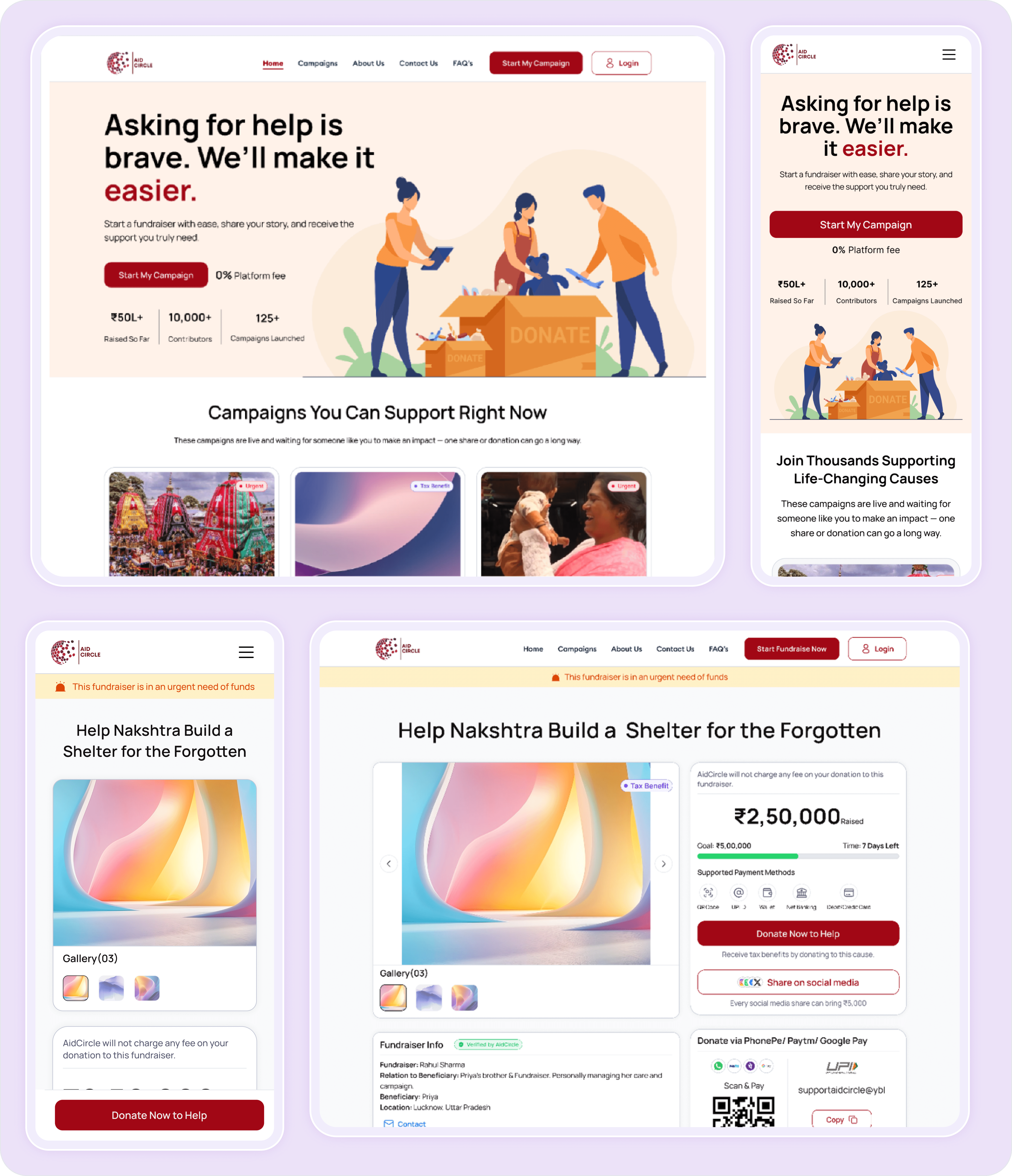
The new homepage instantly communicates impact and trust. Clear storytelling, strong proof, and simple actions guide visitors smoothly into exploring or donating.

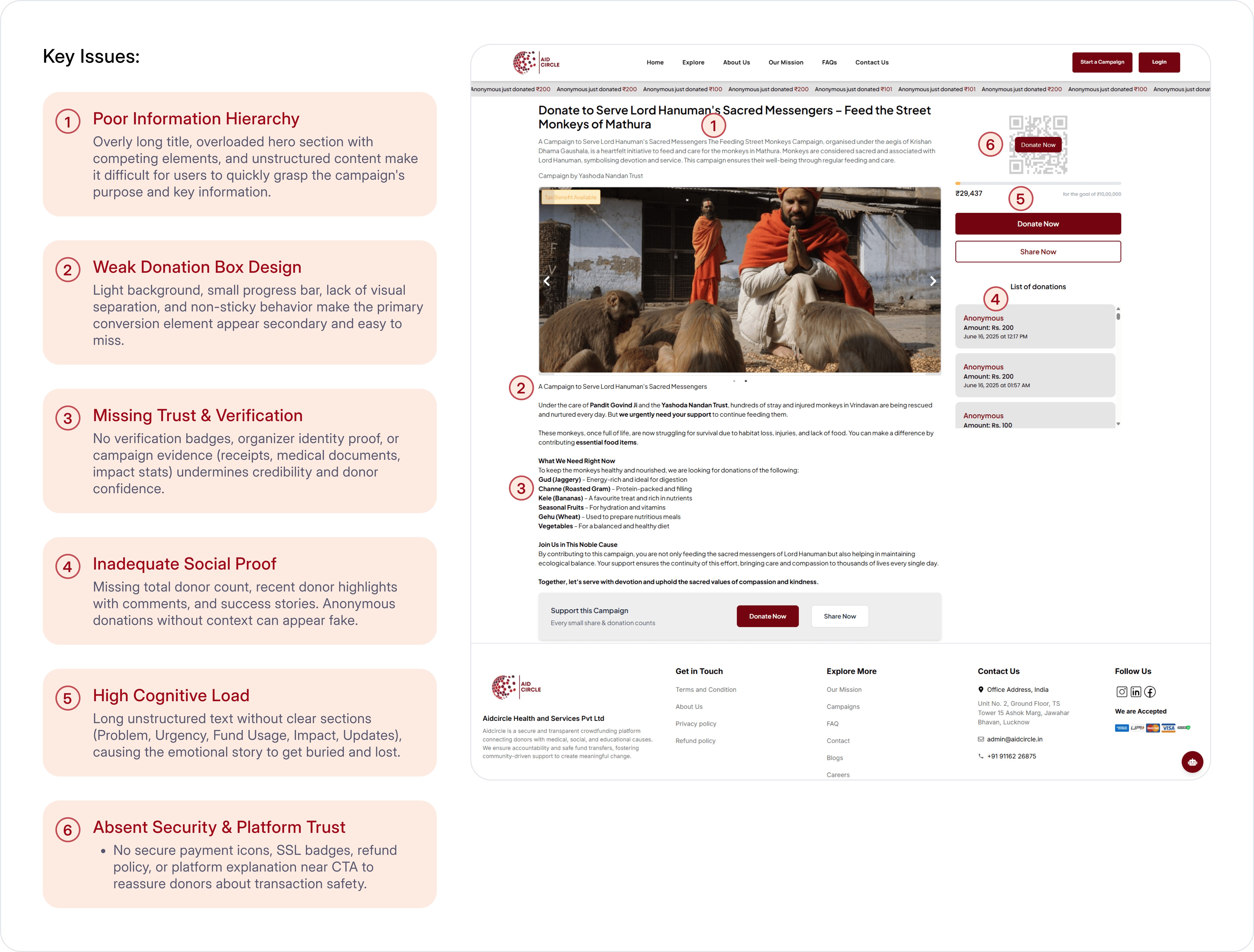
Campaign detail page - Before
Visitors landing from ads weren’t convinced to donate. The story, trust signals, and fund-use clarity were scattered, creating doubt and causing users to drop before making a decision.
Campaign detail page - After
The redesign brings trust, transparency, and emotion forward. Verified info, clear fund breakdowns, and guided decision cues help users feel confident about donating.

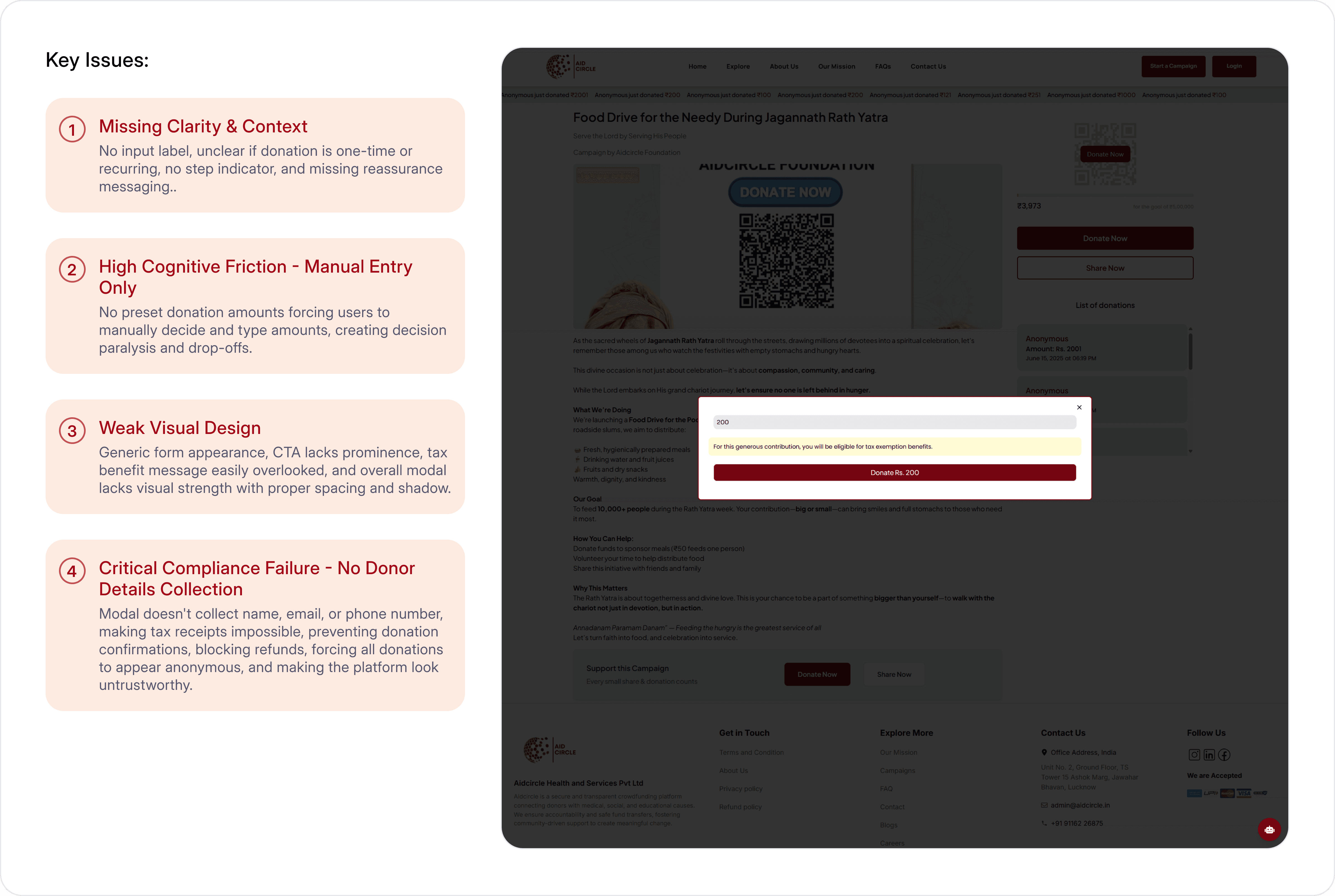
Donation Modal - Before
The donation step felt unclear and unsafe. It didn’t ask for donor details, didn’t offer anonymity options, and didn’t explain what happens next leading to hesitation and abandoned payments.
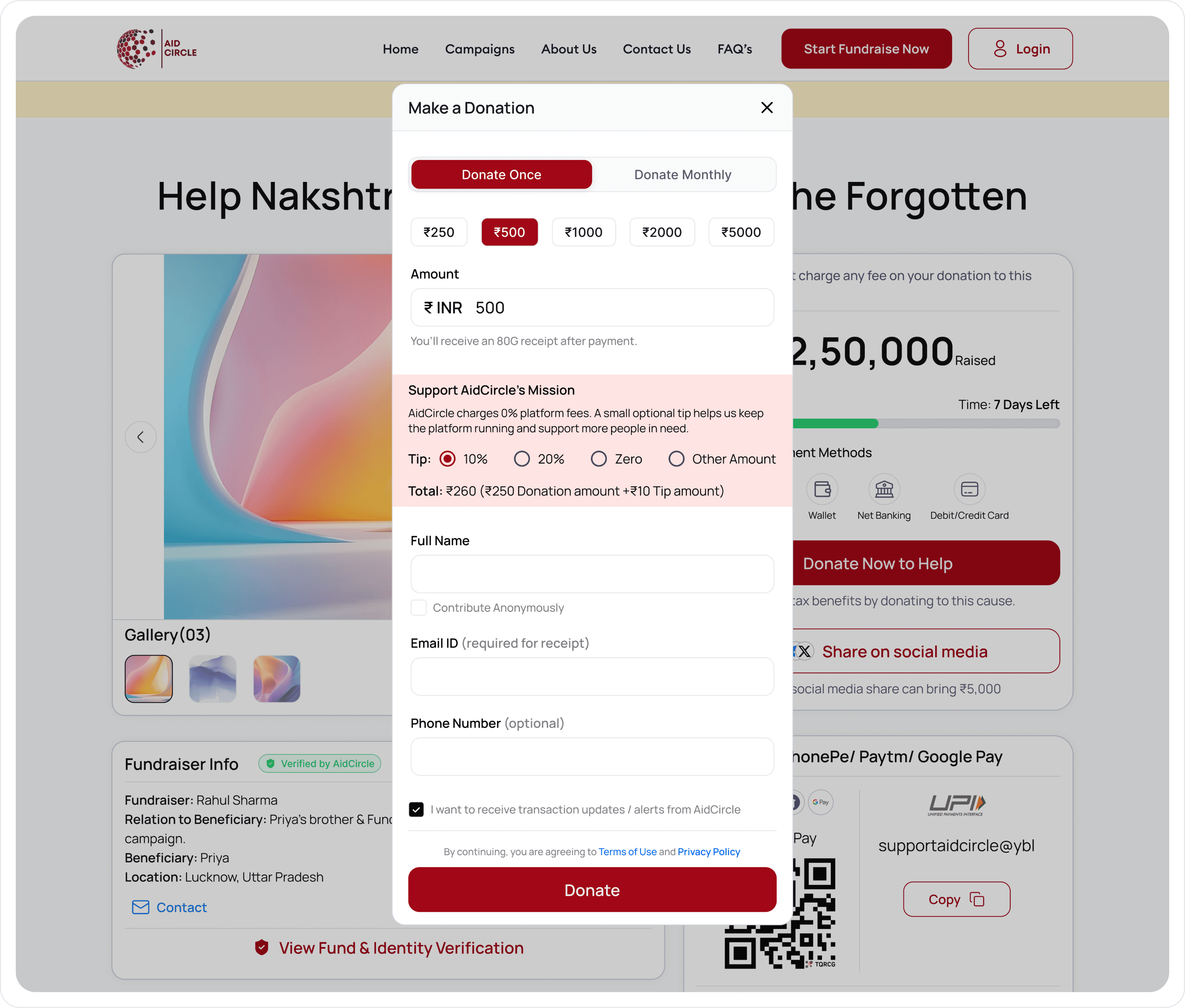
Donation Modal - After
The modal is now simple, transparent, and reassuring. Donors can share their details, stay anonymous, understand charges, and complete the payment with confidence.
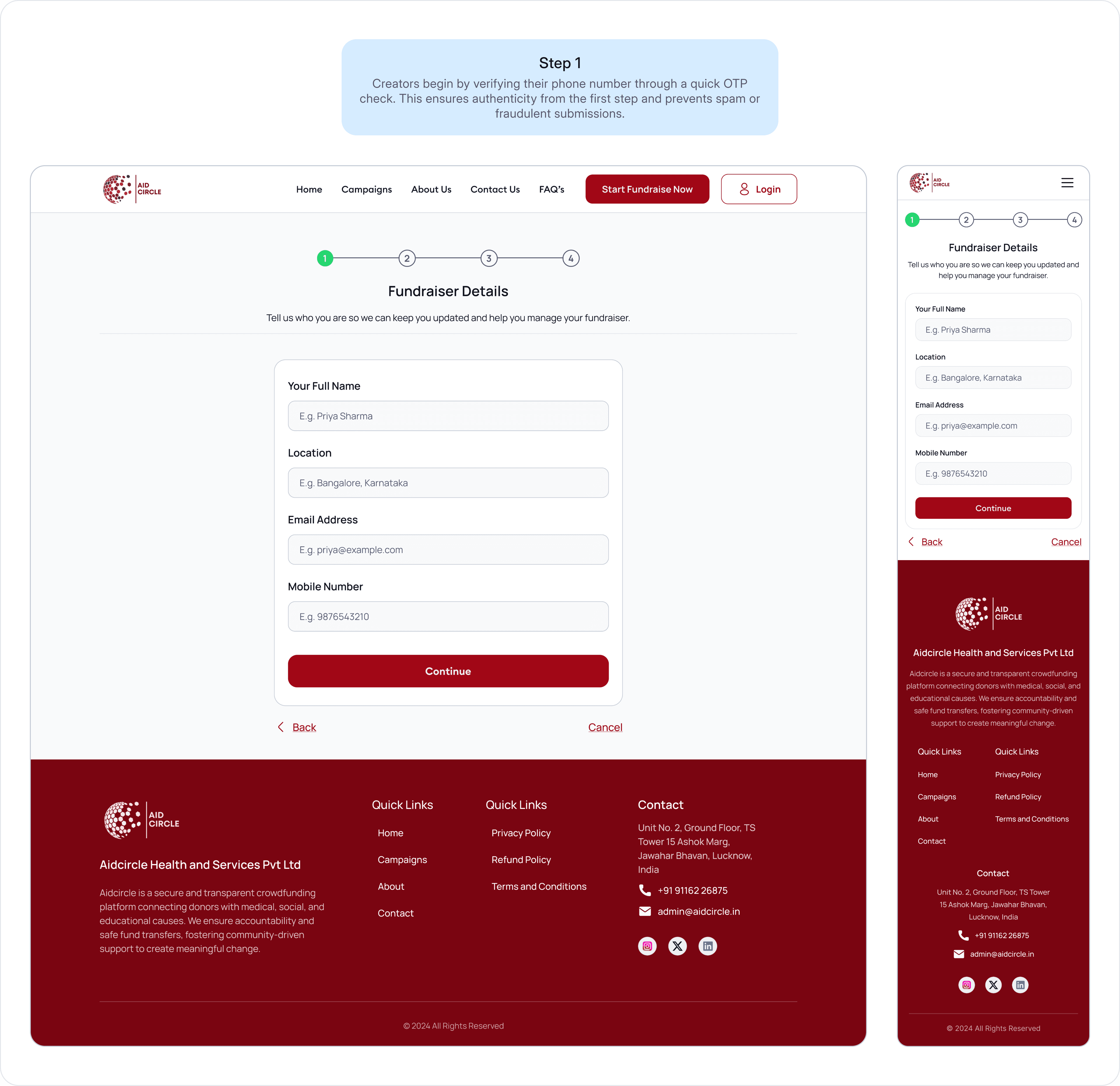
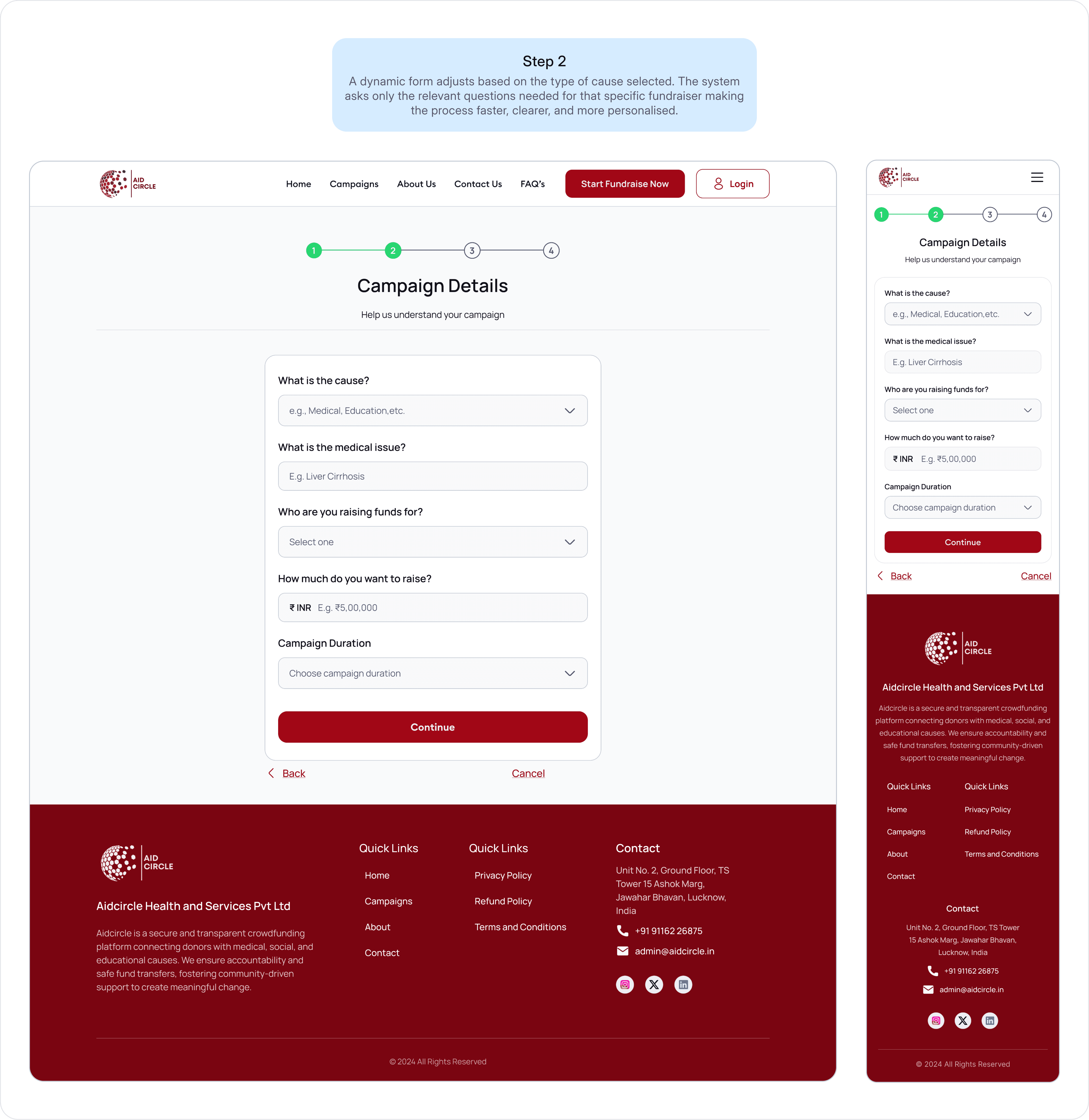
Campaign Creation
The creation process is now fully self-serve and easy to follow. Steps are broken down clearly, with guidance and validations that help anyone launch a campaign confidently without waiting for support.
Style Guide
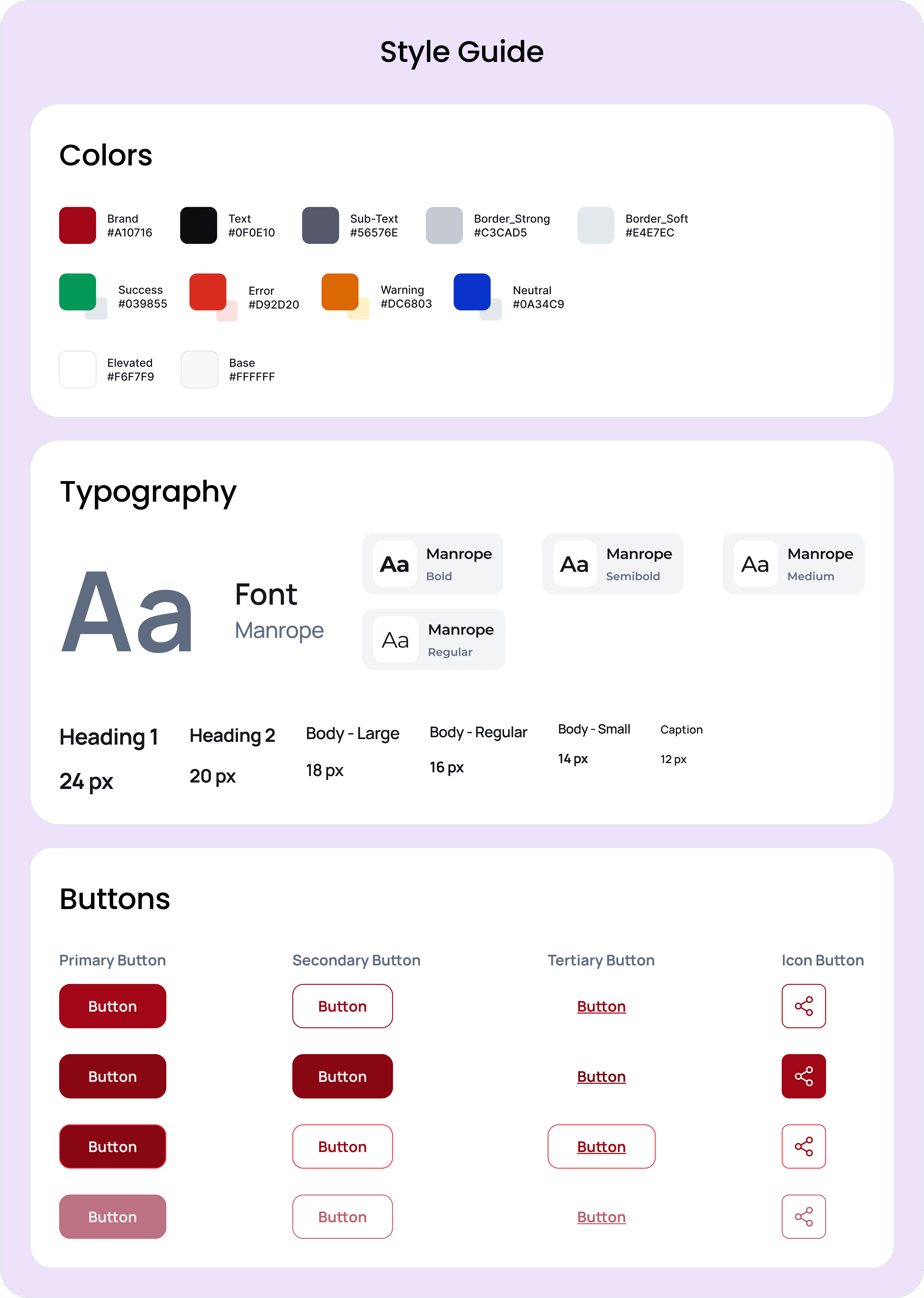
A consistent, warm visual system that builds trust. Clean typography, accessible colours, and simple components make the experience feel reliable and familiar everywhere.
Result
01
75% lift in donation conversion
Conversion rate improved from 1.2% to 2.1% measured against the same social media ad traffic source.
02
Trust-first campaign pages
Verified details, transparent fund breakdowns, and clear storytelling now build immediate donor confidence.
03
Campaign creation goes fully self-serve
What previously required days of staff back-and-forth is now a 4-step independent flow, zero support intervention needed to go live.
04
A donation flow donors actually trust
Preset amounts, payment method visibility, security signals, and anonymity choice removed every hesitation point from the modal.
What I'd Do Differently
Usability testing before launch: With more time, I would test the campaign creation flow with real users-particularly people in crisis situations—to identify friction points I might have missed.
A/B testing the donation experience: Does the default 10% tip increase or decrease total donations? Does showing monthly donations prominently affect one-time donations? These questions need data to optimize conversion.
More design polish: Another iteration would allow for tighter spacing, refined interactions, and better mobile transitions.
Client Feedback

Thank You!